Learning to inject is one thing. Doing it well is something else entirely.
You can complete a course, get your certificate, and technically be qualified to perform Botox and filler treatments. But the gap between qualification and genuine competence? That’s where the real work happens.
Injection technique isn’t just about knowing where to put the needle. It’s understanding facial anatomy in three dimensions, recognising how different faces age differently, and developing the muscle memory that makes your hands steady and precise.
Everyone learns the same anatomy diagrams. Frontalis, corrugator supercilii, the danger zones around blood vessels and nerves. You’ll memorise it all during training.
But faces don’t come with lines drawn on them. Real patients have asymmetries, variations in muscle depth, and different fat distribution patterns. What works perfectly on a training model might need adjustment on an actual person.
Spend time really looking at faces. Not just when you’re treating someone – everywhere. Notice how expressions create different movement patterns, where volume loss shows up first, how bone structure affects what’s possible with filler.
The practitioners who develop excellent injection technique are the ones who never stop studying facial anatomy, even after qualification. They’re looking at faces constantly, mentally mapping where they’d inject, what they’d avoid, what results they could achieve.
Needles are sharp, precise, and give you excellent control. Cannulas are blunt-tipped, more flexible, and potentially safer around vascular areas.
Neither is universally better. Both have their place.
Needles work well for precise placement in areas like the masseter for jawline slimming, or specific points when treating crow’s feet. You know exactly where the product is going. The downside? More injection points mean more potential for bruising and a slightly higher risk if you’re near blood vessels.
Cannulas are increasingly popular for dermal fillers, particularly in areas like cheeks and under-eyes where you’re working near significant blood vessels. One entry point can treat a larger area, there’s less trauma to the tissue, and many practitioners find them safer once they’ve mastered the technique.
The learning curve for cannulas is steeper though. They require different handling, a different feel for tissue resistance, and more confidence in moving through tissue planes without visual confirmation of exactly where the tip is.
Most experienced injectors use both, choosing based on the treatment area and what they’re trying to achieve. Understanding dermal fillers means understanding which technique suits which product and placement.
Too fast and the product goes where you don’t want it. Too slow and you’re causing unnecessary discomfort while struggling to maintain consistent placement.
Injection pressure needs to be firm enough to overcome tissue resistance but controlled enough to place product precisely. This feels different in different areas – injecting into the masseter muscle feels different from placing filler in the tear trough.
Speed matters too. Botox is typically injected as small boluses with quick, decisive movements. Filler often requires slower, more controlled injection as you’re placing larger volumes and need to feel tissue resistance.
This is entirely about practice. Your first 20 injections will feel clumsy. Your hands will be tense, you’ll overthink every movement, and you’ll probably inject either too tentatively or too forcefully.
By 100 injections, you’ll start developing feel. By 500, your hands will know what to do almost instinctively. There’s no shortcut here – it’s repetition that builds the motor skills.
Get the depth wrong and even the right amount of product in the right location won’t give you the results you want.
Botox needs to go into the muscle for most applications. Too superficial and it won’t work properly. Too deep and you might affect muscles you didn’t intend to treat.
Filler depth varies enormously depending on what you’re treating. Deep dermal or subcutaneous for volume replacement in cheeks, more superficial for fine lines, carefully placed in the periosteum for some jawline work.
You’re working blind in terms of direct visualisation. You can’t see through the skin. What you develop instead is an understanding of tissue resistance, the feel of different layers, and the ability to judge depth by the angle of your needle and how the tissue responds.
Pinch the tissue before you inject. Feel the thickness. Adjust your angle and insertion depth accordingly. Some practitioners mark injection points, others work more intuitively – find what works for you.
The best way to handle complications is to avoid them. That means thorough assessment, proper technique, and knowing when not to treat.
Map blood vessels before you inject. Feel for pulses, look for visible veins, understand high-risk zones. The temporal artery, the angular artery, the supratrochlear and supraorbital vessels – these aren’t just anatomy lesson content, they’re things you need to be aware of every single time you inject.
Aspirate when appropriate. Not always necessary, particularly with cannulas, but in high-risk areas with a needle, it’s worth the extra moment.
Inject slowly in vascular areas. If you feel unusual resistance, stop. If the product blanches the skin in a way that doesn’t resolve immediately, stop. If something feels wrong, it probably is.
Have emergency protocols ready. Hyaluronidase immediately available for filler complications, understanding when to refer to emergency services, knowing the signs of vascular occlusion.
Complications happen even to experienced practitioners. But they happen far less often to injectors who are cautious, systematic, and constantly aware of risk.
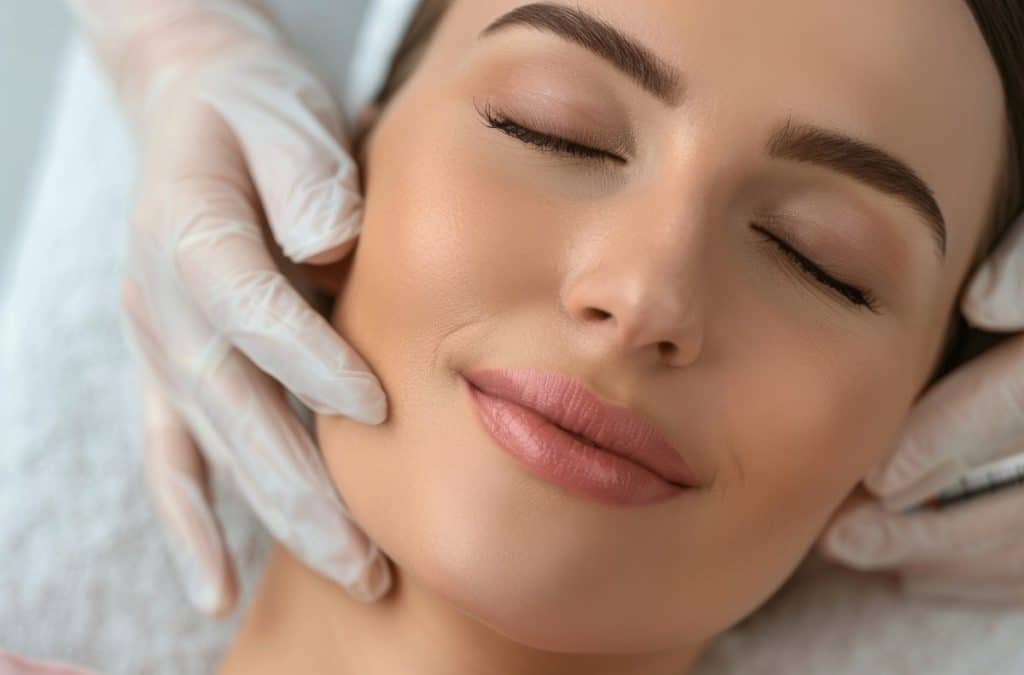
Before you inject anything, you need to know what you’re trying to achieve. And that requires accurate assessment.
Look at the face at rest and in motion. Where does volume loss show? Which muscles are overactive? What’s causing the concern the patient came in with – and is there something else that would give better results?
Sometimes what a client thinks they need isn’t what will actually improve their appearance. They might ask for lip filler when what would really help is supporting the midface. They might want more Botox in the forehead when the issue is actually brow position.
Developing this eye takes time. Lots of time. You’ll refine it over years, not months.
Take photos from multiple angles before treatment. This helps you assess properly, gives you something to refer back to during the procedure, and provides documentation if there are concerns later.
Beginner-friendly courses for new practitioners give you the foundation, but mastery comes from repetition under varied circumstances.
Treat different face shapes, different ages, different ethnic backgrounds. Each teaches you something new about how tissue responds, where fat sits, how skin thickness varies.
Watch experienced injectors work if you can. Observe their hand positioning, their injection angle, how they communicate with patients during the procedure. You’ll pick up small technique adjustments that never make it into formal training.
Video your own injections (with patient consent) and review them. You’ll spot things you could improve that you don’t notice in the moment.
Keep learning beyond your initial qualification. Advanced technique courses, cadaver labs for anatomy, workshops focusing on specific areas – all of these build competence.
Nobody becomes an expert injector in six months. Some people are naturally more dexterous, some develop their eye faster, but everyone needs time and volume of practice.
You’ll have treatments that don’t turn out quite how you planned. You’ll have clients who need adjustments. You’ll occasionally cause bruising in spots you didn’t expect. This is normal.
What separates good injectors from mediocre ones isn’t never making mistakes – it’s learning from each treatment, constantly refining technique, and maintaining the humility to recognise there’s always more to learn.
Your hands will develop the feel for it. Your eye will improve. Your results will get better and more consistent.
Just keep injecting, keep studying, and never assume you’ve got nothing left to learn.