
Curiosity around injectable treatments has never been higher, and one name that increasingly surfaces in professional circles is Profhilo Structura. For patients, the term often raises questions about what makes it distinct. For practitioners, it represents a shift in how skin rejuvenation and contouring can be approached together. Before moving too quickly into technique, it’s worth untangling the basics – what it is, what sets it apart, and why training matters.
Profhilo Structura belongs to the newer generation of injectable products designed not only for hydration but also for subtle structural support. It’s a bioremodelling treatment based on stabilised hyaluronic acid, a substance already found in the body, but presented here in high concentration and with a unique formulation.
Not only is it aimed at improving skin texture and elasticity, but it also provides lift and contour in areas where natural fat and bone volume may be reduced. This dual action is what separates Structura from traditional Profhilo, which is largely associated with skin hydration and collagen stimulation.
Think of it as a bridge between dermal fillers and skin boosters. It doesn’t behave like a filler in the conventional sense – there’s no heavy volumising – but the supporting effect is far more pronounced than with boosters designed purely for radiance.
Understanding the science is essential because Profhilo Structura functions differently from conventional dermal fillers. The stabilised hybrid complexes of hyaluronic acid are injected into targeted areas, where they gradually diffuse through the tissue. Instead of sitting in one place to bulk out volume, the product integrates with surrounding structures.
The result? More even distribution, smoother transitions, and a natural look. Because of its molecular composition, Structura not only hydrates but also encourages the production of elastin and collagen – two critical proteins for firmness and resilience.
There’s another factor: the placement technique. Standard Profhilo often uses the BAP (Bio Aesthetic Points) method, but Structura requires a more tailored approach to suit the contours of the face. That’s where training becomes absolutely essential, since incorrect application risks undermining both safety and results.
While many assume it’s restricted to cheeks or jawline, the treatment isn’t limited to one or two zones. It’s commonly applied to:
Still, caution is critical. Some anatomical regions demand precise technique to avoid vascular compromise. And unlike volumising fillers, Structura is not the go-to solution for lips or high-projection cheek augmentation. Its role is more supportive, less sculptural.
For professionals asking how to inject profhilo structura, the answer is not found in a quick guide. Injection depth, placement, and product quantity vary depending on the patient’s anatomy and treatment goals.
Not only is the product technique-specific, but it also requires the practitioner to judge when it should be combined with other treatments. For example, a patient seeking both hydration and volume restoration may benefit from a combined protocol involving Structura and traditional fillers. That balance cannot be improvised – it requires structured training.
This is why many practitioners enrol in comprehensive modules for skincare professionals before offering Structura. Courses cover not only product science and injection patterns but also patient selection, complication management, and integration with other aesthetic treatments.
The temptation to assume that experience with fillers automatically translates into competence with Structura is risky. While there is overlap, the rheology of this product is distinct. The injection depth is not identical, the spread is different, and the intended effect is subtler.
Moreover, patients are increasingly informed. Many already know the difference between skin boosters, fillers, and collagen stimulators, thanks to the abundance of online content. They expect practitioners to explain why one product is chosen over another. Failing to provide that clarity undermines trust.
It’s also worth noting that regulation in aesthetics is evolving. Insurance providers often require proof of product-specific training, especially when dealing with new-generation injectables. Lack of training may not only jeopardise results but also expose practitioners to professional liability.
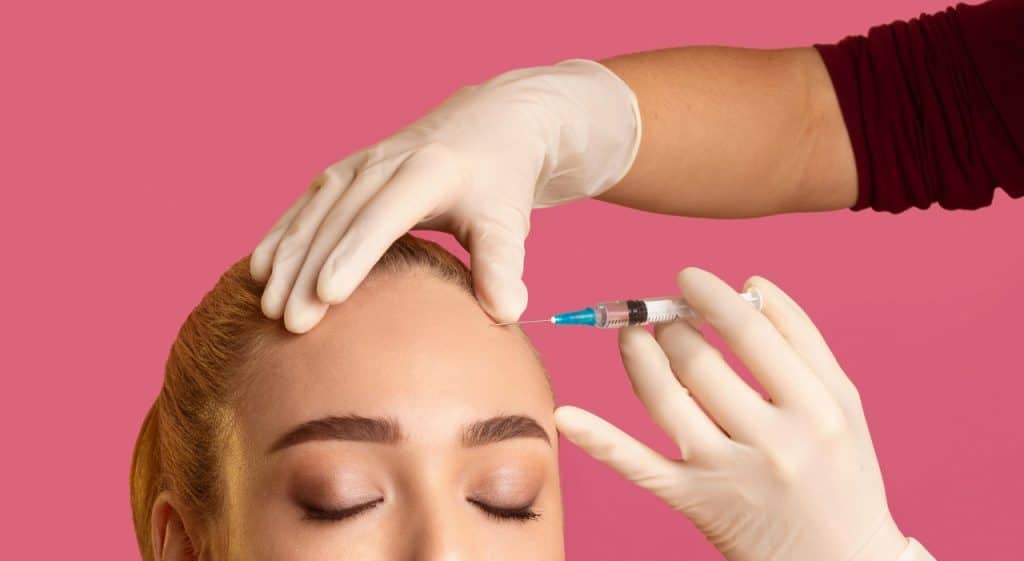
A natural question is how Profhilo Structura fits within the broader injectable landscape. Traditional dermal fillers remain the standard for contouring – lifting cheekbones, reshaping the nose, volumising lips. Skin boosters, meanwhile, focus on hydration and radiance. Structura sits between these categories.
Not only does it improve hydration and texture, but it also adds gentle definition. Patients who don’t want the density of fillers but need more than hydration often find Structura to be the middle ground.
For practitioners, it’s valuable to understand this continuum. A patient may arrive asking for fillers when, in fact, a combined protocol using Structura yields better, more natural results.
No treatment suits everyone. The best candidates for Profhilo Structura tend to be those with early to moderate signs of facial laxity, thinning skin, or hollowing. Patients seeking subtlety rather than dramatic reshaping are particularly well-suited.
But here’s the nuance – age isn’t the only determinant. Lifestyle, skin condition, and underlying bone structure all play a role. Someone in their late 30s with volume loss may benefit, while another of the same age with naturally full features may not.
Clear communication is critical. Patients should be informed that results are gradual and cumulative, not instantaneous. Unlike filler, where projection is visible immediately, Structura takes time as it integrates with tissue and stimulates collagen.
Safety protocols mirror those of other injectables: sterile environment, correct technique, and readiness to manage complications. Common side effects – mild swelling, redness, or bruising – are temporary. More serious risks, though rare, include vascular occlusion, which underscores the importance of anatomical knowledge.
Aftercare advice generally includes avoiding strenuous exercise, heat exposure, and alcohol consumption for 24–48 hours post-treatment. Gentle skincare continues as usual, but patients are advised against facials or massage over the treated area until recovery is complete.
Profhilo Structura reflects how injectables are evolving: no longer just about adding volume or hydration in isolation, but about blending both in a subtle, integrated way. For patients, it offers natural refinement; for practitioners, it demands precise skill.