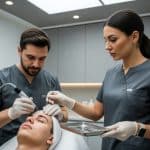
When people think of aesthetic practitioners, they often imagine the technical side first – syringes, skin treatments, laser machines that look vaguely like something out of a sci-fi set. But the truth? The skills that really matter go far beyond the equipment. Being good at aesthetics is as much about communication, perception, and self-discipline as it is about steady hands and clinical knowledge.
Let’s break it down – because if you’re serious about entering (or thriving in) the field, these seven skills aren’t optional extras. They’re the bedrock.
You can learn to administer dermal fillers with precision. You can master microneedling or chemical peels. But aesthetics isn’t just about results on the skin – it’s about the entire experience. Clients expect safety, reassurance, and trust. And here’s where those essential skills step in.
We think it’s easy to underestimate this, especially in an industry that can sometimes be presented as purely cosmetic. But let’s be clear: the best practitioners don’t simply “perform treatments.” They build relationships, understand psychology, and keep their professional standards consistently high.
We can’t dodge the obvious one. You need to know your anatomy, contraindications, treatment protocols – the lot. Without it, the rest collapses. Technical skill doesn’t mean rushing into the most advanced procedures; it means doing the fundamentals right, every single time.
And here’s a reality check: techniques evolve. Devices change. What was cutting edge five years ago may already feel outdated. So technical mastery isn’t static – it’s a commitment to staying updated through accredited professional development in aesthetics. That phrase may sound formal, but it’s your golden ticket to maintaining credibility.
Think about it – would you let someone near your face with a needle if you didn’t trust them? Exactly. Communication is everything. It’s not about scripted reassurance; it’s about genuine listening and making clients feel heard.
Sometimes that means saying no. If someone asks for a treatment that won’t benefit them, or worse, could cause harm, you must be clear and confident in explaining why. Being firm yet empathetic isn’t easy, but it separates professionals from people chasing a quick sale.
There’s a temptation in aesthetics to always say yes. After all, demand is high, and treatments aren’t exactly cheap. But integrity means knowing when not to treat. That takes courage.
We think this is where many practitioners truly earn their reputation. People respect honesty, especially in a field where the results are so visible. Doing the right thing might not always feel profitable in the short term, but in the long run, integrity builds a client base that stays loyal.
Aesthetics straddles a curious line: it’s medical practice, but it’s also artistry. A filler misplaced by a millimetre can change an entire look. Too subtle, and the client may feel disappointed. Too much, and suddenly it’s “overdone.”
The best practitioners develop a critical eye for balance, proportion, and harmony. This isn’t about chasing trends (they shift constantly) but about refining an aesthetic sensibility that enhances each individual’s natural features. You’re not creating new faces – you’re working with what’s already there.

Here’s something that doesn’t appear on most training manuals: clients sometimes bring more than skin concerns. They might carry insecurities, anxieties, or even unrealistic expectations. Navigating that requires emotional intelligence.
We’re not suggesting practitioners should double as therapists (there’s a line), but empathy is crucial. Spotting when someone is seeking treatments for reasons that might not be healthy – that’s part of the responsibility. Sometimes the bravest move is gently redirecting them or suggesting alternatives.
Yes, aesthetics is about treatments, but it’s also a business. Appointments, stock management, hygiene protocols, marketing – all of these sit on your shoulders if you’re independent.
Organisation doesn’t just prevent chaos; it safeguards clients. Forgetting an aftercare follow-up? That undermines trust. Running out of sterile supplies? That’s unacceptable. Practitioners who thrive treat business management with the same seriousness as clinical skills.
If you’re at the point of mapping your training journey, it’s worth choosing the right aesthetic course to ensure business development is included alongside practical skills. That way, you’re not scrambling later to patch gaps.
Finally – and this is a big one – the industry doesn’t stand still. Regulations shift. New technologies emerge. Client expectations evolve. The only way to stay ahead is to embrace lifelong learning.
Continuous professional development isn’t just ticking boxes. It’s the difference between becoming outdated and remaining relevant. We think the best practitioners are those who genuinely want to keep growing, who see training not as a burden but as an opportunity.
And honestly, it’s more enjoyable that way. Stagnation is boring.
Aesthetic practice is far more than injections or skincare routines. It’s a blend of technical excellence, ethical awareness, artistry, empathy, and business savvy. The practitioners who stand out are those who refuse to stop learning and who treat each client as a whole person, not a procedure.
If you’re serious about building a career in this space, invest in your skills with intention. Stay sharp, stay curious, and above all, stay ethical. Because in an industry where appearances matter, it’s the unseen qualities – judgment, integrity, care – that ultimately set you apart.